
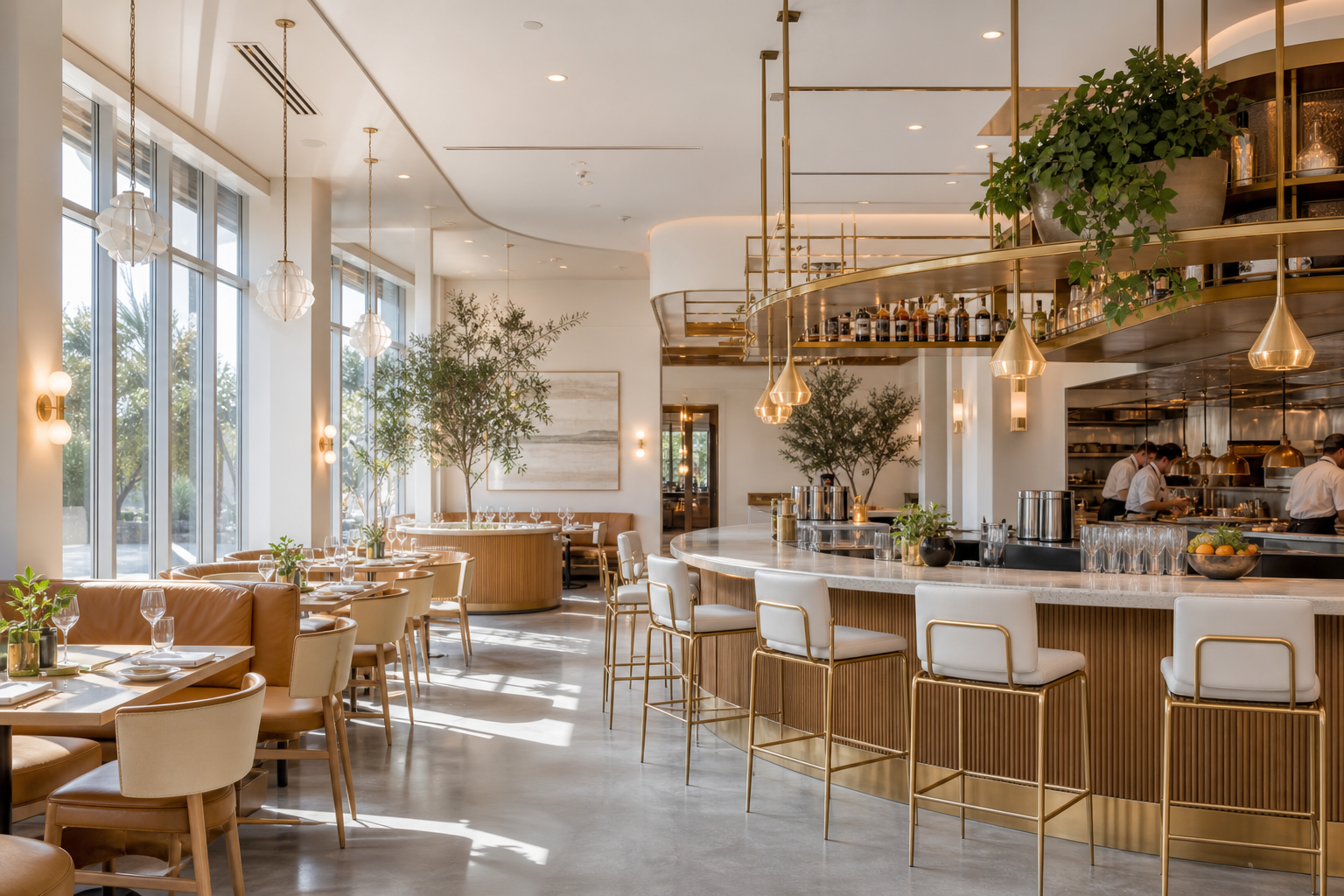
The return of the neighborhood format. Why Instagram restaurants are losing guests
Guests are tired. Not of restaurants in general — of restaurants that were first designed for Instagram and only then for people. Pink neon, green subway tile, velvet sofas matched to the cocktail. It all worked for five years. Then it stopped.
Against this fatigue, demand is quietly rising for something else. Warm restaurants close to home. Taverns. Bistros. Wine bars with real kitchens. Trattorias. Osterias. Fish places near the market. Formats that have both product and atmosphere — and that don't need to explain to the guest what exactly they're supposed to like.
What changed
The Instagram restaurant was an attraction. The guest came to look, took a photo, tagged the location, moved on. The owner got a wave, the investor got first-year revenue, the designer got a publication. Eighteen months later the wave faded, and the place either closed or got redone.
The neighborhood tavern works differently. The guest comes on a Wednesday evening because they don't feel like cooking. On Friday because they're meeting a friend. On Sunday with their kids. They don't need a camera. They need a chair by the window, a decent glass, and someone who remembers that last time they didn't order the veal.
This is a different economy. Not a flash, but a steady burn.
What this means for design
A brasserie or a tavern can't be designed like a photoshoot. The "one strong wall" trick doesn't work here. Nor does the "gimmicky" light that falls beautifully on a face but starts hurting your eyes after an hour. Nor do chairs you can't sit in for two hours.
What works is different.
Materials that age beautifully — unlacquered brass, unstained wood, plaster with character. Lighting designed for the food and the atmosphere, not for stories. Acoustics where you can hear the person across the table. A layout where the bar has its own life, the dining room has its own, the kitchen has its own — and they don't interfere with each other.
The hardest part is making it not look made. Authenticity in design costs more than props — you can't buy it off the shelf.
Why it's coming back now
Several reasons converge.
The guest got older. The generation that went to trendy projects at twenty-five is now looking for a place they can come to at forty — and not feel like they're either at a club or in a museum.
The cost base went up. In a market where rent, wages and product get more expensive every quarter, a one-day concept has no cushion. Formats with returning guests survive.
And finally, saturation. In any large city — Barcelona, Lisbon, Madrid, Berlin — there's a street with six similar places sharing the same aesthetic. The guest sees it. And goes to the one that doesn't fit in.
What this doesn't mean
This is not a return to ethnography. Not checkered tablecloths, not imitations of grandma's kitchen. Not "make it like 1970s Paris".
The modern tavern is a format, not a style. It can be minimalist. It can be richly detailed. It can have an open kitchen or a closed one. What matters is something else: the guest needs to believe the place exists for food and people — not to be photographed.
What an owner should do about it
If you're opening a new place — model the economics around the returning guest, not the first month.
If you're remodeling an existing one — don't chase the next trend. Remove what's keeping the guest from staying for a second glass.
If you're choosing a designer — look not at portfolios of pretty pictures, but at projects that still work five years later.
There will be plenty more trends. The brasserie has always been here.
Ready to transform your space?
Let's discuss your restaurant, bar, or hospitality project.
Get in Touch