
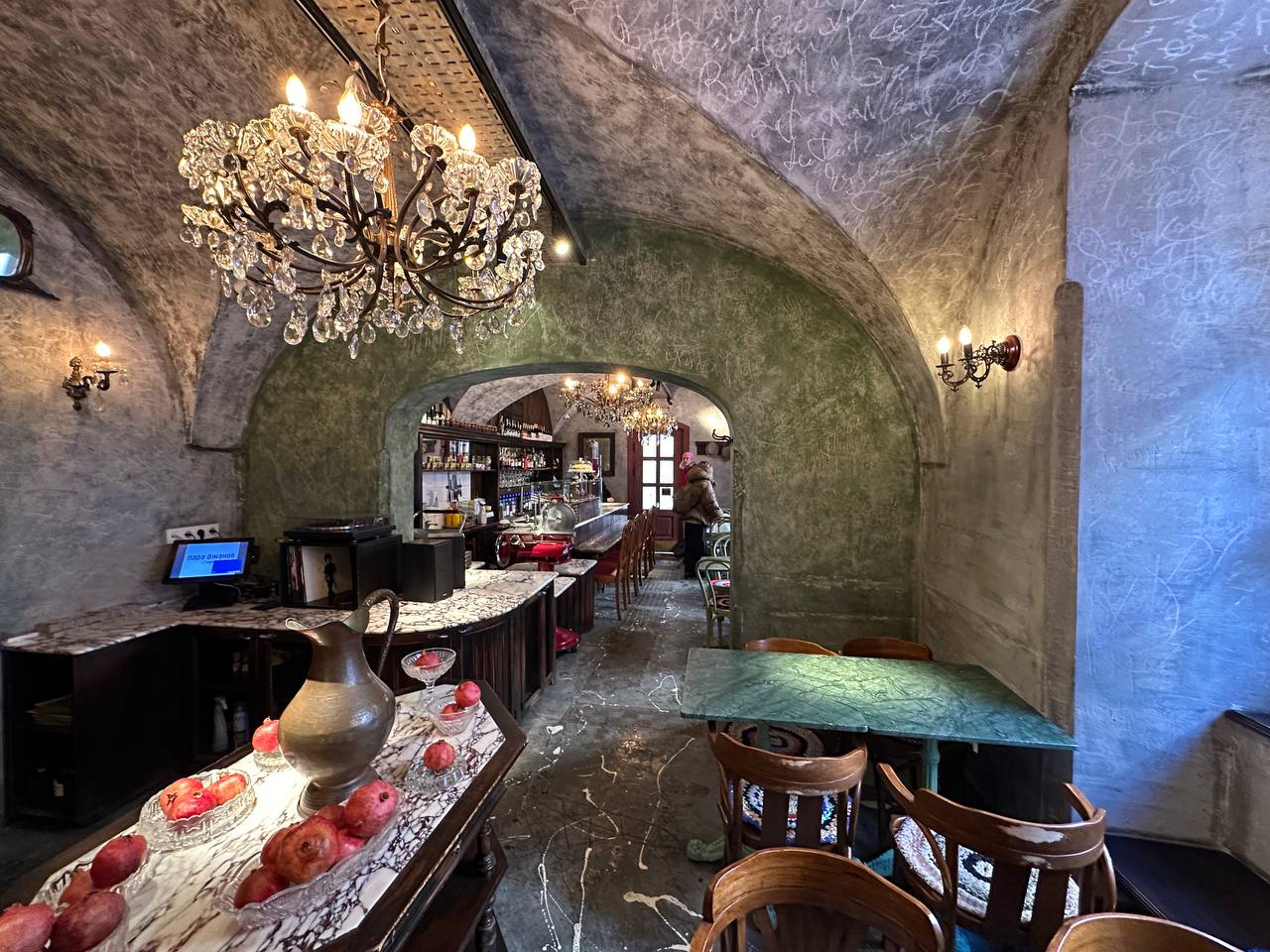
Light in a restaurant: a complete guide
Light is the first thing a guest feels. Not sees — feels. The door is still closing behind them, the menu isn't in their hands yet, but the decision to stay or leave has already been made. Made by the skin, the pupil, some old animal part of the brain that knows: it's safe here, it's tasty here, you were expected here.
Twenty-five years of designing restaurants taught me one thing. You can be wrong about furniture — they'll move it. You can miss with the wall colour — they'll repaint. You cannot be wrong about light. Light is the nervous system of the dining room. Cross the wires and the patient won't wake up, no matter how much the marble on the counter cost.
The three layers nothing works without
Good lighting is not a chandelier. It's a system. At least three layers working together, like three voices in a choir. Take one away and the false note is immediate.
Ambient light. The base fill. What lets you navigate the space at all — see where the table is, where the waiter is, where the exit is. In fine dining we keep the level at 30–50 lux. In casual — 100–200. Those aren't numbers from a textbook, they are years of calibration: the values at which the face across the table reads, but doesn't look like it's under interrogation. A dimmer is mandatory. The room at lunch and the room at ten in the evening are two different restaurants, and they must live by two different scripts.
Task light. Bar, host stand, kitchen pass, server stations. The logic here is different: the bartender must see what they're pouring, not guess the gin by smell. The trick is making this light bright enough to work, without letting it "leak" into the room. The bar glows — the guest sits in half-light. That's how the stage is made.
Accent light. The most interesting layer. This is no longer function — it's drama. A pendant over the table outlining a circle of intimacy for two. A spot pulling the wine shelf out of the shadow. An LED strip under the bar countertop that turns the bottles into museum exhibits. Accent is what separates a restaurant from a canteen.
A rule I repeat to clients like a mantra: accent-to-ambient ratio should be at least 3:1. That is, the point of interest is three times brighter than the average background. Any less and the eye glides without catching on anything. The room turns flat. A flat room is an empty room by month three.
Temperature: the amateur's main mistake
When I see a new restaurant with cold white light across the whole room, I know two things. First — they cut the budget on the lighting design. Second — they'll close within a year.
Colour temperature is measured in Kelvin. The lower the number, the warmer the light. A simple scale worth memorising:
— 2700–3000K — fine dining, premium bars, wine concepts. Warm, almost candlelit. Skin looks alive, wine looks deep, the steak looks like steak and not a chunk of something grey.
— 3000–3500K — casual dining, bistros, trendy places. Still warm, but with energy. Right when you need to keep table turnover higher.
— 3500–4000K — fast casual, coffee shops, daytime formats. Energising. The guest eats, pays, leaves.
— above 4000K — hospital, office, warehouse. In a restaurant — never.
A separate story is the colour rendering index, CRI. Minimum 90, ideally 95+. This isn't bulb-maker marketing — this is whether the tartare looks like tartare or like a suspicious lump of an indeterminate shade. Low CRI kills plating better than a bad chef.
Where the guest looks — that's where the light goes
One of the most underrated principles: light should illuminate what you sell. It sounds obvious — until you walk into a room where the chandelier hangs over an aisle and the plate sinks into shadow.
The table is the main stage. A pendant or a directed spot should pick out exactly the plate, the glass, the guest's hands. Not the head. Light into the crown of the head is death to the face across the table — sunken eye sockets, shadows under the nose. The horror-movie effect. The source is always slightly forward and above, at an angle, so the face is lit softly by the bounce off the table.
Walls work on the perception of volume. Leave the walls dark and the room visually compresses. Light them and it expands. Sconces, grazing light along a textured wall, picture lighting — all instruments of spatial control. In a small room I almost always light the walls. In a large one — the opposite, I leave dark pockets to create the feel of intimate niches.
The ceiling is a separate topic. A glowing ceiling is McDonald's. A dark ceiling with point sources is a restaurant. A simple rule that, for some reason, gets broken constantly.
Scenes instead of a switch
In a modern project, light is not "on/off". It's scenes. Morning, day, early evening, prime time, late night. A minimum of four presets, each with its own levels for every group of fixtures.
At lunch you want light that says "people work here, eat here, run on". A touch colder, a touch brighter, accents muted. At dinner — the opposite: ambient drops, accents flare, candles or their imitation appear on the tables. By midnight — deep half-light, with only the bar countertop and the spots above seats still on.
A DALI or KNX system does this automatically on a schedule. The guest doesn't notice the transitions, but for some reason orders a digestif with dessert when they hadn't planned to. That's the invisible work of light.
The bar — its own universe
The bar in a restaurant is always a separate project inside the project. And its light works by its own laws.
The back bar is the main display. Bottles should glow from within, not reflect a glare off the ceiling. Backlit shelves, a strip under each shelf pointing upward, sometimes individual spots on the expensive positions. A bottle of whisky at two hundred euros standing in the shadow sells worse than the same bottle in a beam of directed light. That's not magic, that's physiology.
The bar countertop is a working surface. You need functional light from above, ideally from pendants, so the bartender's hands cast no shadow. And, mandatory — a strip under the edge of the counter on the guest side. It lights the hands, the glass, makes the counter feel "floating". A cheap trick that always works.
Bar seats are lit point by point, individually. Each seat is its own little stage. Not a general flow from above, but a personal bubble of light.
What I do in my projects
At Wine Love in Kyiv we built the lighting around the idea of a wine cellar lifted to the surface. A warm 2700K across the room, a custom chandelier as the central object, backlit wine racks and a point of light on every table. The bar is separated from the room by a step of brightness — it's a touch brighter, and that creates the sense of a stage.
At Saint Bar the logic is different. It's an evening format, so the overall light level is very low — around 40 lux. But there are many accents, and they are contrasting. A guest coming in off the street is briefly blinded for the first seconds, and then the eye starts catching details: the lit back bar, the flicker of candles, reflections in the mirrors. That "immersion" effect is planned, not accidental.
In both projects, the main thing is not individual fixtures but zones of light and shadow. Darkness is the same kind of instrument as light. Perhaps even more important. An evenly lit room is a room without character. A room with hollows and peaks is a room with a story.
What you cannot do
A few mistakes I see regularly that cost owners money.
Identical pendants across the whole room at equal intervals. That's not a restaurant, that's a shopping-mall car park. Light must have hierarchy.
LED strips wherever possible. Lighting under every step, around the perimeter of the ceiling, under every table. The result is a 2008 disco. A strip is an accent, not a way to fill the space.
Bare Edison bulbs as the only light source. They look beautiful but barely light anything. If the whole concept rests on them — the guest can't see the food. They should be decor on top of a proper lighting scheme, not in place of it.
Cold light in the toilet. The guest goes to wash their hands, sees themselves in the mirror — grey, tired, with bags under their eyes. Comes back to the table in a bad mood. The toilet should have the same temperature as the room, plus correctly positioned light at the mirror — in front of the face, not above.
Skimping on dimmers. Two-thousand-euro fixtures hooked up to a basic switch are money thrown into the air. Dimming is critical.
What it adds up to
A good restaurant lighting project costs money. A genuinely good one — serious money. But it's the investment with the highest return among all interior decisions. Furniture dates in five years, finishes wear, concepts change. Properly designed lighting works for decades and quietly, invisibly, lifts the average ticket every night.
The best light in a restaurant is the one the guest doesn't notice. They just feel that it's good here. That the face across the table looks better than they look at home in the mirror. That the wine drinks more easily. That they want to order one more, the last one.
That's the work of light. Quiet, invisible, decisive.
Ready to transform your space?
Let's discuss your restaurant, bar, or hospitality project.
Get in Touch